
This month’s featured bulk herb of the month is actually a blend of three different plants known as triphala. This classic formulation has been used in the ancient healing system of Ayurveda for thousands of years. Triphala translates to “three fruits” in Sanskrit, the language of ancient India, where the ancient healing system of Ayurveda originated. Ayurveda’s unique preventative approach to holistic health and wellbeing centers around an individual’s specific constitution.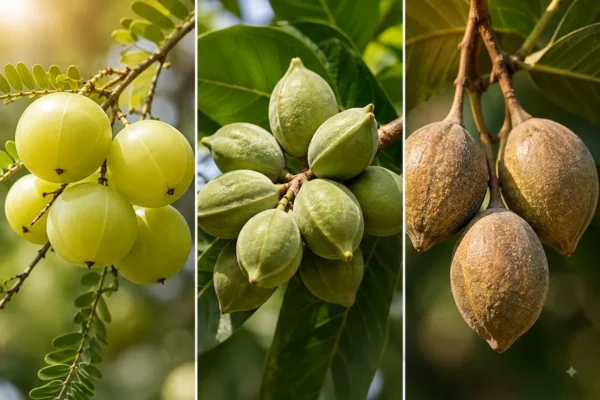
Triphala is composed of equal parts of three fruits:
- Amalaki (Emblica officinalis, common name amla)
- Bibitaki (Terminalia bellerica, common name beleric myrobalan)
- Haritaki (Terminalia chebula, common name black myrobalan)
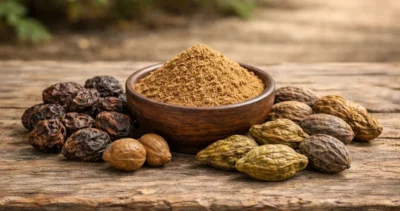
The fruits grow on deciduous trees in the Indian gooseberry family that all grow throughout India. The fruits are dried, powdered, then blended together. The fruits are extremely astringent and sour, giving them a tightening/toning action and mouth-puckering, drying quality. After its initial sourness, triphala has a few bitter notes and then a residual sweetness. Its healing action as a deep and enduring tissue cleanser is believed to come from it possessing five of the six tastes (all but salty).
Triphala is known best as an effective bowel cleansing formulation that is gentle enough for ongoing use. Some cleansing herbs tend to have a rough, scraping effect internally, which makes them less ideal to take long term. Triphala’s astringent tannins tone the digestive tract, strengthen the digestive mucosal membranes, and encourage effective peristalsis (bowel movements). This can make it a helpful supplement for treating inflammatory gastrointestinal conditions such as Crohn’s disease, ulcerative colitis, acidic digestive reflux, and leaky gut.
Each of the three herbs that comprise triphala have their own unique medicinal properties. Haritaki can help relieve digestive irritation from infection or parasites, and is said to dry all leakages from the body. Bibhitaki is useful for clearing mucous or congestion in the heart and lungs. Amalaki can also help reduce inflammation in the gut, cleanse the liver, reduce elevated cholesterol levels, and heal arterial and cardiac tissue.
 In addition to supporting the digestive and circulatory systems, triphala has a similar protective effect on the lining of our body, the skin. Its nourishing, restorative, rejuvenative properties support the body’s detoxification processes, and its antioxidant properties protect cells from free radical damage. Amalaki contains 10 times more vitamin C than an orange, making it a great source of this antioxidant per volume. Triphala also contains vitamin A, which, in combination with vitamin C, allows it to act as an immunomodulator. Hence, triphala can be used to support skin conditions such as eczema, psoriasis, and acne, and contribute to glowing skin.
How to Use Triphala
Triphala powder can be used alone, added to herbal formulas, encapsulated, taken with warm water, juice, ghee, or honey, or used topically in shampoo blends or as a dry massage powder. Triphala powder is commonly taken as a nightly tonic to restore and cleanse the digestive system.
Traditionally, it’s taken as a tea, as in Ayurvedic practices tasting the medicine initiates the digestive and healing process. To make a tea, make a decoction by adding ½ teaspoon of triphala powder per cup of hot water. Stir and allow the tea to cool, then drink. Alternatively, you can allow the triphala to soak overnight and strain the powder in the morning.
Find triphala powder in our bulk herbs department.